Ducks
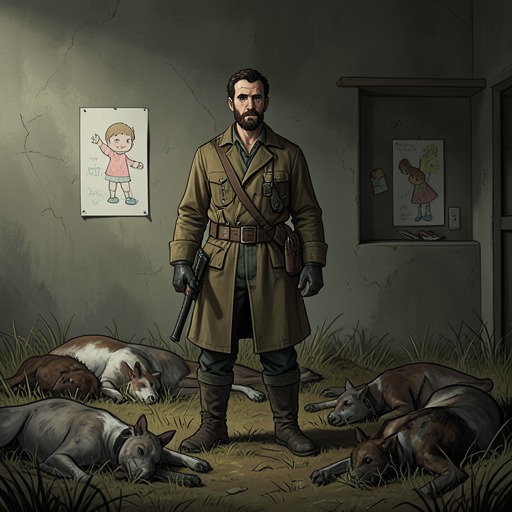
Fever DreamDucks are among the first animals through which the story makes David’s altered condition visible. In Carla’s recollection, a young David buries a dead duck, then watches another stagger toward him and collapse; the next morning, three more are dead. He buries each one and cries, but insists that burying is not the same as killing. The ducks’ deaths do not establish what caused them. Instead, they make the story’s questions about poison, contamination, and the boundary between the familiar and the strange concrete, while exposing how little the adults can confidently explain.
The First Duck
Carla finds David in the backyard, kneeling with his back to her and digging in the dirt. He is four and a half. A duck lies beside him, its eyes open, and he is using the spoon-shaped part of a broken plastic shovel whose handle lies nearby. Carla says his face is red and his eyes swollen from crying; he does not look up when she approaches. The small, practical details make the scene less like an account of a child harming an animal than a record of a mother trying to understand what she has come upon. David is grieving, but Carla cannot tell what has happened to the duck or what his behavior means.
Carla does not step forward at once. She watches him, troubled by his movements, and then sees something move among the wheat. Another duck appears and walks toward them. After David and the duck look at one another for several seconds, it takes a few unsteady steps and falls dead. The sequence offers no explanation linking David to the duck’s death: its arrival, its gaze, and its collapse remain a disturbing observation rather than proof of cause. The encounter nevertheless binds the child and the animal in Carla’s account, making the moment a turning point in her growing alarm.
Repetition, Grief, and Uncertainty
The following morning, Carla sees three more dead ducks in the yard while washing dishes. She watches from the window, a half-washed saucepan in her hand, as David digs one hole after another. She says she lacks the strength to go outside. The repeated burials extend the first incident into a pattern, but repetition does not resolve its meaning: David is again associated with dead ducks, and again he is burying rather than visibly causing their deaths.
When Amanda asks whether David killed them, the narrative gives David’s answer directly: “I buried them. Burying isn’t the same as killing.” His distinction is literal and morally charged. It separates the act he admits from the act Amanda fears, without explaining how the ducks died. Carla says he cried each time he buried one, a detail that resists reducing him to a source of danger. The scene holds the evidence and its uncertainty together: repeated deaths, a child’s mourning, and a mother’s inability to intervene or understand.
A Story Told Through Questions
The ducks enter the book through Carla’s remembered story, which Amanda hears while questioning David. That layered telling matters: the reader receives the incidents as Carla recalls them, while Amanda interrupts, asks for clarification, and tests what the account might mean. David, in turn, directs attention toward what is important and what is not. The exchange makes the animal episodes part of a larger struggle over who controls the story and which details deserve attention.
Carla’s account also sits beside her description of David after his fever: he gradually begins speaking again, but answers ordinary questions with the same fixed phrase, “That is not important.” Carla says that hearing it repeatedly in place of answers about food, cold, or bedtime makes her legs tremble. Set against the duck burials, the phrase suggests a break in familiar communication, not an explanation of the deaths. The ducks provide observable events; the child’s unfamiliar speech intensifies the family’s sense that something has changed without telling them what.
Animals and the Question of Poison
The conversation explicitly associates the ducks with the worms and with the wider subjects of poison and contamination. Yet it also resists treating that association as a solved mystery. The story distinguishes the bodily sensation of worms from the poison and contamination already discussed, and Amanda’s repeated return to what happened reflects her effort to locate a precise beginning. The ducks’ deaths supply a sequence that can be remembered—the burial, the second duck’s collapse, the three dead animals the next morning—but not a definitive account of cause.
That gap gives the ducks a narrative role beyond illustrating a family’s fear. Their deaths are consequential in their own right within Carla’s memory: David buries them, cries over them, and becomes the focus of questions about what he did. At the same time, the story makes them signs that invite interpretation without authorizing certainty. The distinction between killing and burying remains unresolved as an explanation, but exact as a statement of what David says he did; the animals’ repeated deaths make that difference central to how the family remembers him.